Kodomo-no-Kata
Kodomo-no-Kata
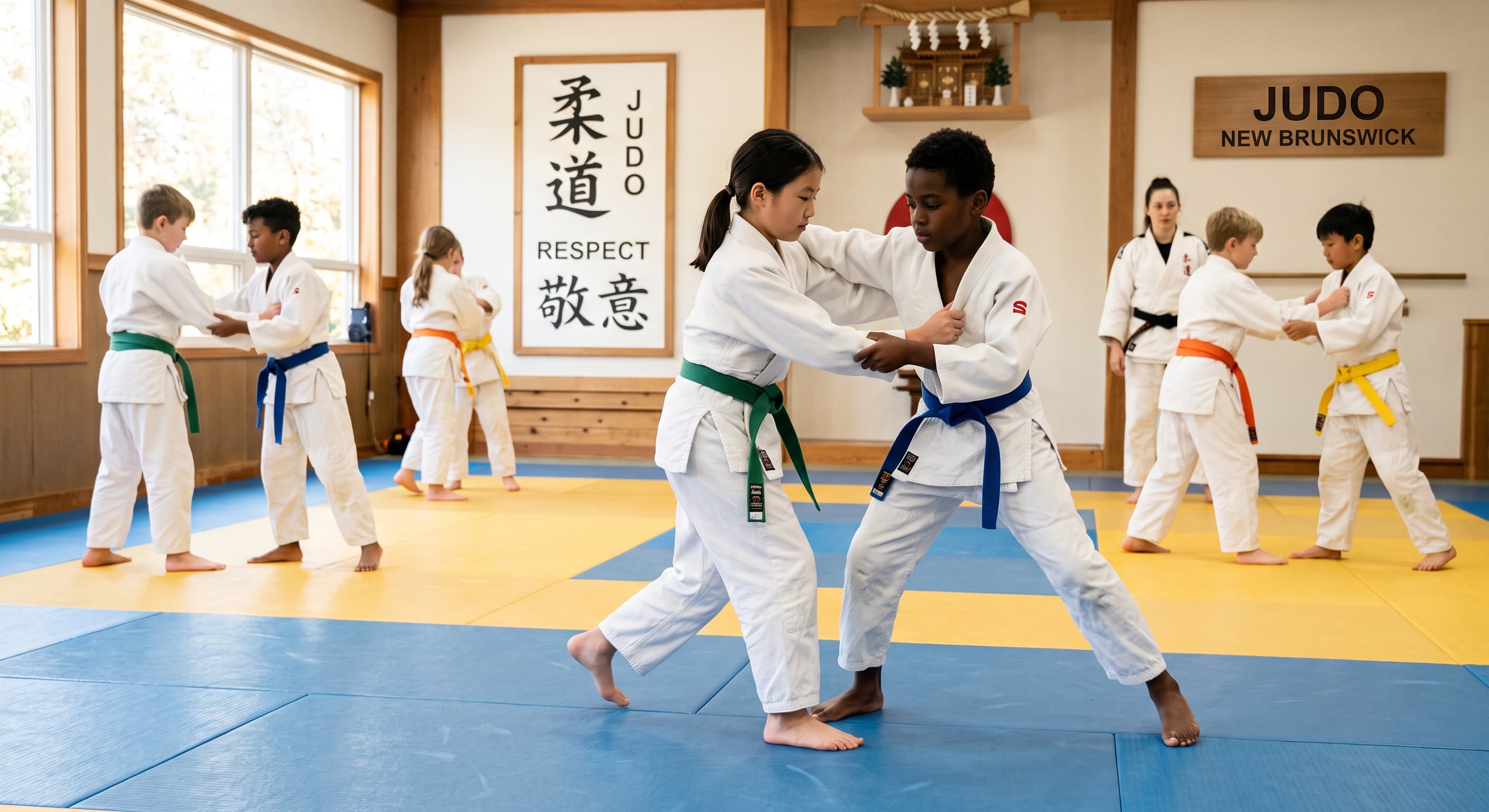
Forms for children — a progressive learning journey for young judoka. From your first bow to your first throws, one level at a time.
Why kata?
Why practise kata as a young judoka?
Kata builds the foundations of judo in a structured, safe and motivating way — and grows the judoka, not just the technique.
Confidence
Steady, repeatable steps let every child feel themselves improve.
Coordination
Whole-body movement that sharpens balance and control.
Respect
Etiquette and the bow frame everything — respect for the dojo and the partner.
Teamwork
Tori and Uke learn to work together and trust each other.
Technical development
Clean fundamentals that the rest of judo is built on.
Competition preparation
Safe falling, balance and timing that carry straight into shiai.
Safety
Falling and throwing learned safely for both partners, every time.
Toward traditional kata
A natural bridge to the traditional Kodokan kata that follow.
The journey
Your Kodomo-no-Kata roadmap
Eight steps, from the prologue to Level 1. There is no rush — take each one at the pace that keeps it safe and fun.
Prologue
JoshōStep onto the mat: how to wear the judogi, bow, fall safely and move.
- Etiquette
- Posture
- Breakfalls
- Footwork
- Body control
Level 7 (Nana)
NanaFirst throws: tip a kneeling partner using front and rear shifting.
- Breakfalls
- Shifting
- First throws
Level 6 (Roku)
RokuTurning throws on a kneeling partner: Hiza-guruma and Tai-otoshi.
- Rolling breakfall
- Turning
- Leg & hand throws
Level 5 (Go)
GoStanding throws and balance breaking in eight directions.
- Gripping & moving
- Balance breaking
- Standing throws
Level 4 (Yon)
YonBalance breaking on the move with leg, hand and hip throws.
- Balance on the move
- Body control
- Hip throw
Level 3 (San)
SanEnergetic throws and the first standing-to-ground transition.
- Dynamic kuzushi
- Leg, hand & hip throws
- Throw-to-hold transition
Level 2 (Ni)
NiReaping throws, a combination, and three throw-to-hold transitions.
- Reaping throws
- Combinations
- Throw-to-hold transitions
Level 1 (Ichi)
IchiThe pinnacle: advanced throws, a combination, and four transitions to holds.
- Advanced throws
- Combination
- Four transitions
Level colours mark the order of the journey — a visual guide, not official belt ranks.
Learn the language
Bow, breakfall, reap, hold — search every Japanese term in one place.
Open the dictionaryWatch every level
The complete official Kodokan demonstrations, organised level by level.
Open the video libraryTeaching Kodomo-no-Kata?
The official guide, evaluation sheets and video resources, in one place for coaches.
Coach resources
Questions
Frequently asked questions
What is Kodomo-no-Kata?
Why is it important?
Who is it for?
How long does it take?
Can parents help at home?
How is it evaluated?
Adapted for Judo New Brunswick from the official Kodokan programme. Coordination: Sonia Boulianne — Kata Committee, Judo New Brunswick.